Why Copying "Best-Sellers" No Longer Works: How ODM Gas Water Heaters Drive Brand Growth in 2026
- Share
- Issue Time
- Jan 13,2026
Summary
In 2026, gas water heater growth depends on ODM innovation—not copycat designs. Learn how market-driven OEM & ODM partners help brands upgrade product lines and compete globally.

For years, launching a new gas water heater followed a familiar formula. Brands looked at what was selling well, sent a few reference images to a supplier, and asked for something similar. The product reached the market quickly, prices stayed competitive, and sales followed—at least for a while.
But as the global gas water heater market moves into 2026, that formula is losing its effectiveness. Retail shelves and online platforms are crowded with products that look alike, perform similarly, and compete mainly on price. In this environment, copying "best-sellers" no longer builds brand value. It slowly erodes it. The brands that continue to grow are those that invest in differentiation, relevance, and long-term product strategy—often through strong ODM partnerships.
Why Copycat Gas Water Heaters Fail to Deliver Sustainable Growth
The problem with imitation is not speed; it is sustainability. When multiple brands launch nearly identical gas water heaters, retailers struggle to explain the differences, and consumers default to price or brand familiarity. Margins shrink, promotional pressure increases, and product life cycles become shorter.
More importantly, copied products rarely reflect real market needs. Differences in water pressure, usage habits, energy costs, climate, and regulatory requirements mean that a "successful" model in one region may underperform in another. Without targeted adaptation, brands risk offering products that are technically acceptable but commercially weak.
By 2026, growth in the gas water heater segment will no longer come from repeating old designs. It will come from understanding why consumers choose certain products and translating those insights into models that fit specific markets and brand positions.
OEM vs. ODM: A Strategic Difference for Brands
OEM and ODM are often mentioned together, but their strategic value is very different. OEM manufacturing focuses on execution. Brands bring finalized designs, and the factory produces according to specification. This works well for brands with strong internal R&D teams and deep market knowledge.
ODM, however, plays a broader role. An experienced ODM gas water heater manufacturer participates in product planning from the start—market analysis, performance definition, configuration planning, and design optimization—before production begins. For brands aiming to upgrade product lines or expand into new segments, ODM offers speed, clarity, and reduced risk.
In 2026, as competition intensifies, ODM capability is becoming a key driver of brand differentiation. It allows brands to move beyond surface-level changes and build products that are truly aligned with market demand.
The Hidden Cost of Weak Product Iteration
Many brands recognize the need to upgrade their gas water heater offerings but feel constrained by their existing suppliers. Common challenges include slow development cycles, limited customization options, and a lack of understanding of end-user behavior. As a result, product updates become incremental rather than meaningful.
This stagnation affects more than sales. It impacts brand reputation, channel confidence, and long-term planning. When products fail to stand out or respond to market trends—such as improved energy efficiency, smarter temperature control, or more intuitive interfaces—brands lose momentum.
Choosing the right manufacturing partner is not only about capacity or price. It is about whether the supplier can support continuous iteration and help brands stay relevant as consumer expectations evolve.
What to Look for in a Reliable OEM & ODM Gas Water Heater Partner
Selecting a gas water heater manufacturer for 2026 requires a broader evaluation than before. Key considerations include:
Market understanding: Can the manufacturer translate regional usage patterns and regulations into practical product solutions?
Customization capability: Is the supplier able to adjust performance, structure, and configuration to match different brand strategies?
Engineering maturity: Does the team have proven experience in balancing safety, efficiency, durability, and cost?
Execution stability: Can designs move smoothly from concept to mass production without quality fluctuation?
These factors determine whether a partnership will simply maintain the status quo or actively support business growth.
A Real ODM Success Case from Latin America
A Latin American appliance brand illustrates how ODM capability can change outcomes. The brand had worked for years with a supplier that offered limited flexibility. Product updates were slow, and new models differed only slightly from previous versions. Sales were stable but flat, and retailers began asking for more distinctive options.
The brand decided to switch to partnering with another reliable gas appliance manufacturer, Greaidea, and was very satisfied with the results. Greaidea conducted a detailed review of the local market, including installation conditions, consumer usage habits, and price segmentation. Together, they restructured the gas water heater lineup, introducing multiple new models with clearer positioning.
The result was a product line that better matched market expectations and gave the brand stronger talking points in both retail and distribution channels. Compared with previous suppliers, the ODM partner delivered faster iteration, clearer communication, and solutions that aligned with commercial goals.
Why Experienced ODM Manufacturers Make a Difference
This is where manufacturers like Greaidea stand out. With over 25 years of experience in gas water geater manufacturing, Greaidea has developed a deep understanding of how gas water heaters perform across different markets. Its OEM and ODM capabilities extend beyond production, covering market analysis, product planning, and engineering execution.
Rather than offering generic solutions, Greaidea works closely with brands to understand their positioning, target users, and channel strategies. This collaborative approach allows product designs to reflect real market needs, from temperature stability and energy efficiency to structure layout and usability. Many brands working with Greaidea highlight its ability to translate ideas into commercially viable products with consistency and reliability.
Looking Ahead to 2026: Build Products, Not Copies
As the gas water heater market moves forward, the brands that succeed will be those that invest in relevance rather than repetition. Copying existing products may reduce short-term risk, but it limits long-term potential. Growth in 2026 will come from informed decisions, strategic product planning, and partnerships that support continuous improvement.
If you are planning to upgrade your gas water heater product line, expand into new markets, or move beyond the limitations of your current supplier, now is the time to reconsider your approach. Connecting with Greaidea for an in-depth discussion can open the door to tailored, market-driven solutions—designed to help your brand stand out with confidence and build lasting value.
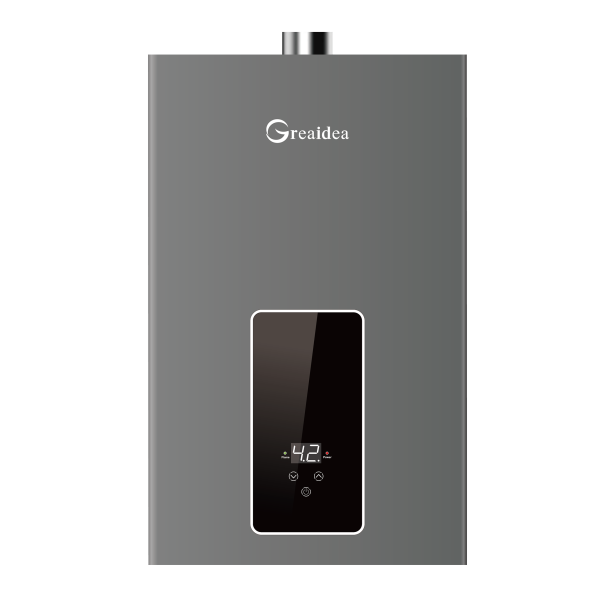
Air-cooled gas water heater with AI temp control, V-shape burner, and dual-speed fan for high efficiency.
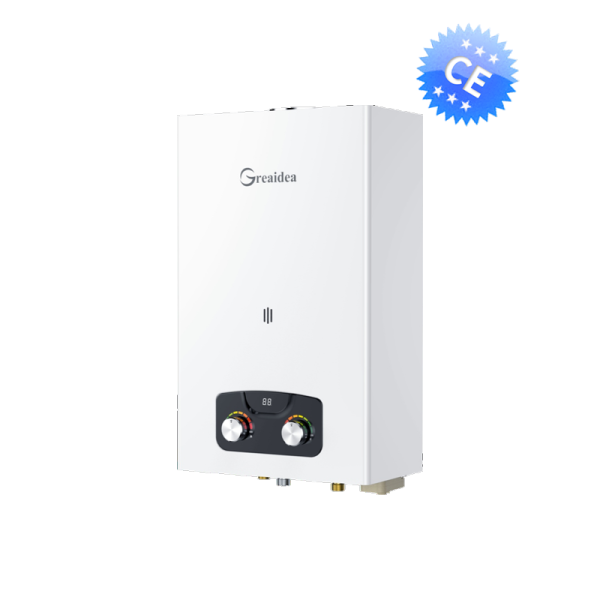
Designed for eco-friendly markets seeking reduced nitrogen oxide emissions and high efficiency.
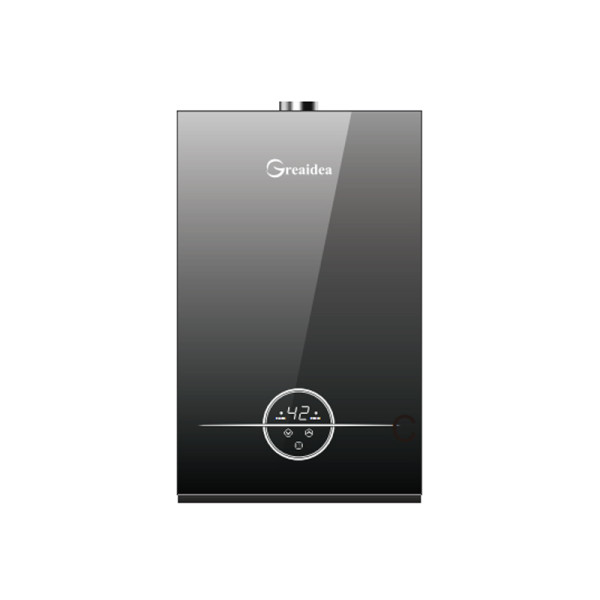
The glass-panel gas water heater can be customized with patterns according to market demand, and the temperature can be adjusted via a touch screen panel.
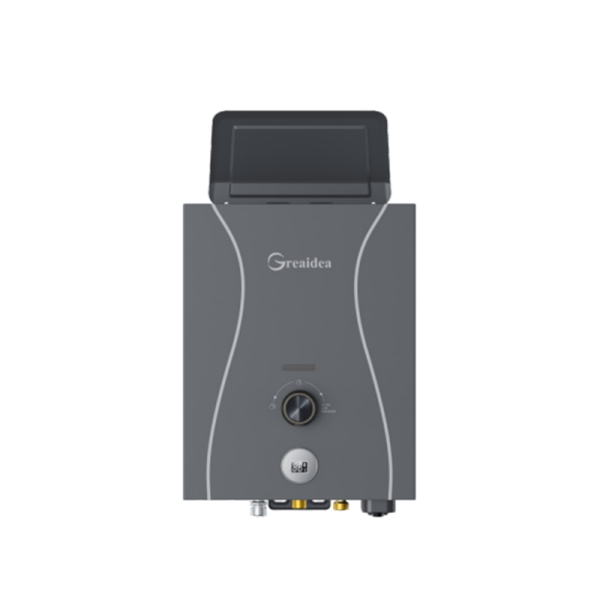
5.5L flue gas water heater, compact wall-mounted design, powerful combustion – durable.